
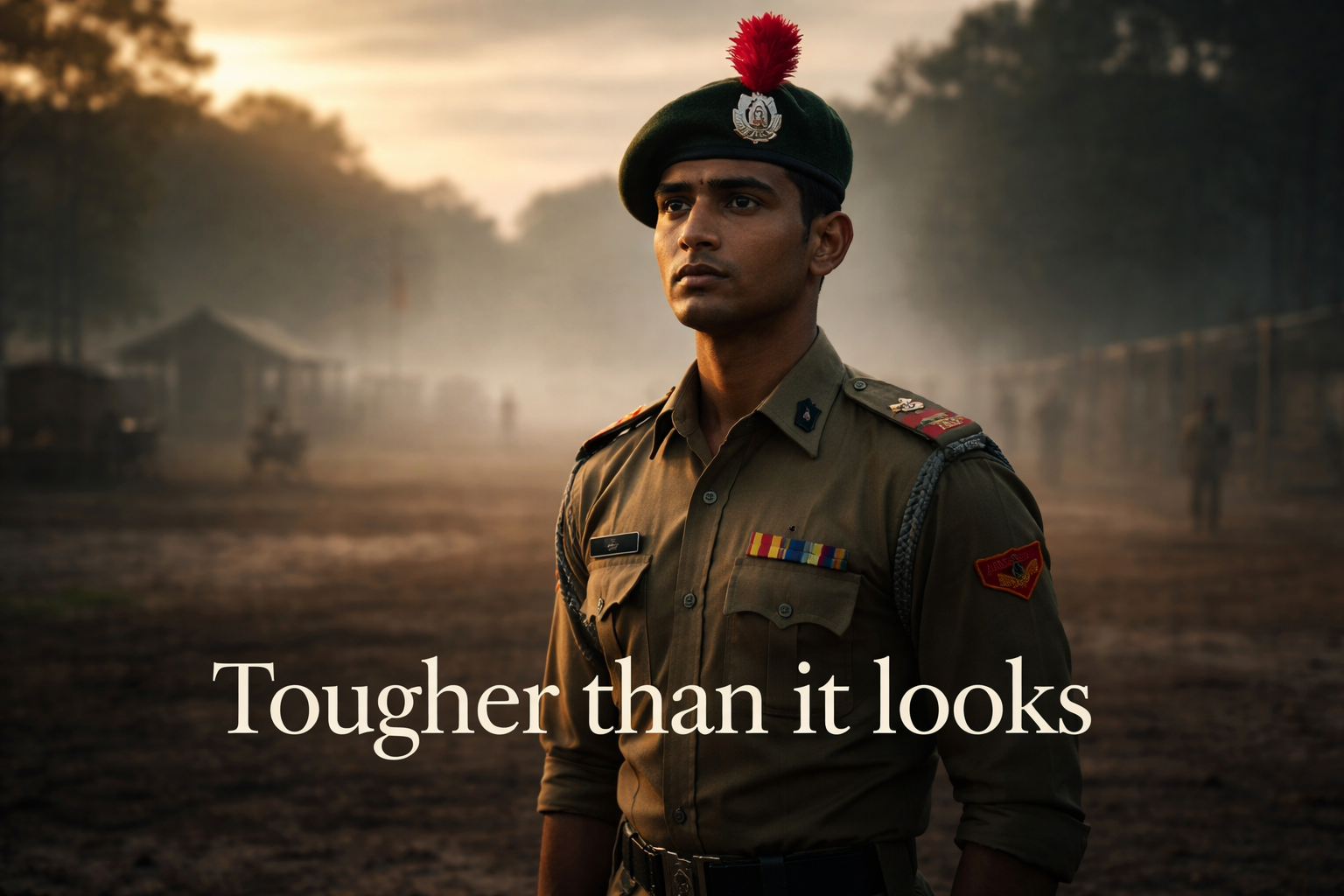
Is the ‘Special Entry’ tag a shortcut or a hidden challenge? Most aspirants think having an NCC ‘C’ certificate makes the journey to the Indian Army easy because you skip the written exam. But before you get excited, you need to understand the weight of the filter you are about to walk into.
✅ Who Should Seriously Apply
This is specifically for those who didn’t just ‘get’ an NCC ‘C’ certificate but lived the cadet life. If you have a minimum of 50% marks in your graduation and an ‘A’ or ‘B’ grade in your NCC certificate, this is your direct ticket to the Services Selection Board (SSB). It is ideal for final-year students who are confident in their personality and communication skills rather than just their ability to crack a written paper.
⛔ Who Should Avoid Applying
If you are applying just because there is ‘no exam’ and ‘no fee,’ you are likely wasting your time. The Army is not looking for people who take the path of least resistance. Also, if your graduation marks are exactly 50% or slightly above, your chances of even getting the SSB call-letter are slim because the shortlisting cut-off usually goes much higher than the minimum eligibility.
💼 Salary Reality Check
While the official notification doesn’t shout about the numbers, you start as a Lieutenant. During your training at OTA Chennai, you receive a stipend (currently around ₹56,100). Once commissioned, your in-hand salary with allowances like MSP and DA can easily cross ₹1 lakh. However, remember this is a Short Service Commission (SSC) for 10+4 years, so you must plan for a second career in your late 30s.
📝 Selection Process Explained Simply
The process is deceptively simple on paper. First, they shortlist applications based on your graduation percentage. If you make the cut, you receive an email for the SSB interview. This is a 5-day rigorous psychological and physical evaluation. If you clear the SSB and stay fit in the medicals, you find your name in the final merit list for the October 2026 batch.
📊 Competition & Difficulty Reality
The competition is ‘silent but deadly.’ For the 63 seats for men and a mere 5 seats for women, thousands of NCC cadets apply from across India. Because there is no written exam to filter candidates, the SSB boards are often much stricter. You aren’t just competing with others; you are being measured against an ‘Officer Like Quality’ (OLQ) standard that is unforgiving.
⚠️ Common Mistakes Candidates Make
- Uploading an NCC certificate where the name or grade is slightly different from the degree marksheet.
- Applying with a ‘C’ grade in NCC, which is technically allowed but almost never gets shortlisted.
- Failing to calculate the aggregate percentage of all years/semesters of graduation correctly.
- Underestimating the ‘Officer Intelligence Rating’ (OIR) test at the SSB thinking only the interview matters.
🎯 Practical Preparation Tips
- Start reading a national newspaper daily; your knowledge of current affairs is tested heavily in Group Discussions.
- Work on your physical stamina now, especially running and push-ups, so you don’t struggle during the GTO tasks.
- Get your documents in order, especially the certificate from the Principal/Head of Institution if you are in your final year.
- Practice narrating your ‘Picture Perception and Description’ (PPDT) stories in front of a mirror to build confidence.
🧭 Our Honest Advice
This entry is a golden opportunity but do not make it your ‘Plan A’ exclusively. The selection ratio is often less than 1%. If you have the marks and the certificate, definitely apply—it’s free. But continue preparing for the CDS or AFCAT written exams simultaneously. The ‘shortcut’ of NCC entry is often the hardest path to actually walk through.
📌 Real-world example: A cadet once had 80% in graduation and an ‘A’ grade in NCC, but was rejected at the SSB gate because his father’s name spelling in the NCC certificate didn’t match his Aadhaar card. Always verify your documents before the link opens.
🚨 Warning: No coaching center or ‘agent’ can guarantee a selection in the SSB. If someone asks for money to ‘set’ your interview, they are 100% scammers. The Army’s selection is strictly merit-based.
✨ The uniform is earned through character, not just a certificate. Focus on becoming the person who deserves the rank.
❓ Frequently Asked Questions (Career Guidance)
Q. Can I apply if I have a ‘C’ grade in my NCC ‘C’ Certificate?
Ans. Technically, the minimum requirement is a ‘B’ grade. If you have a ‘C’ grade, you generally do not meet the eligibility criteria for this special entry.
Q. Is there any age relaxation for OBC or SC/ST candidates?
Ans. No. In the Indian Army officer cadre entries, age limits are strict for everyone. You must be between 19 and 25 years as of July 1, 2026.
Q. What if I am in the final semester of my degree?
Ans. You can apply provided you have secured at least 50% aggregate marks in the previous years/semesters and can produce your degree by the time the course starts.
Q. Do I have to pay any fees for the SSB interview?
Ans. No, the application is free, and for your first SSB attempt for this entry type, the Army even reimburses your AC 3-tier rail fare.
Q. Will I get a permanent job in the Army through this?
Ans. This is a Short Service Commission for 10 years, extendable to 14. Permanent Commission is granted later based on performance and vacancies.
Q. Does having a ‘C’ certificate guarantee an SSB call?
Ans. No. The Army shortlists candidates based on their graduation percentage. If many high-scorers apply, the cut-off marks for an SSB call-letter can go as high as 65-70%.
Q. Can I apply for both NCC Special Entry and CDS in the same year?
Ans. Yes, you can. In fact, most serious aspirants do both to increase their chances of reaching the SSB.
🔔 Verify official details
This career guide explains suitability, risks, and long-term value.
For eligibility rules, important dates, and the official application process,
always cross-check the original notification.